 EN
EN ES
ES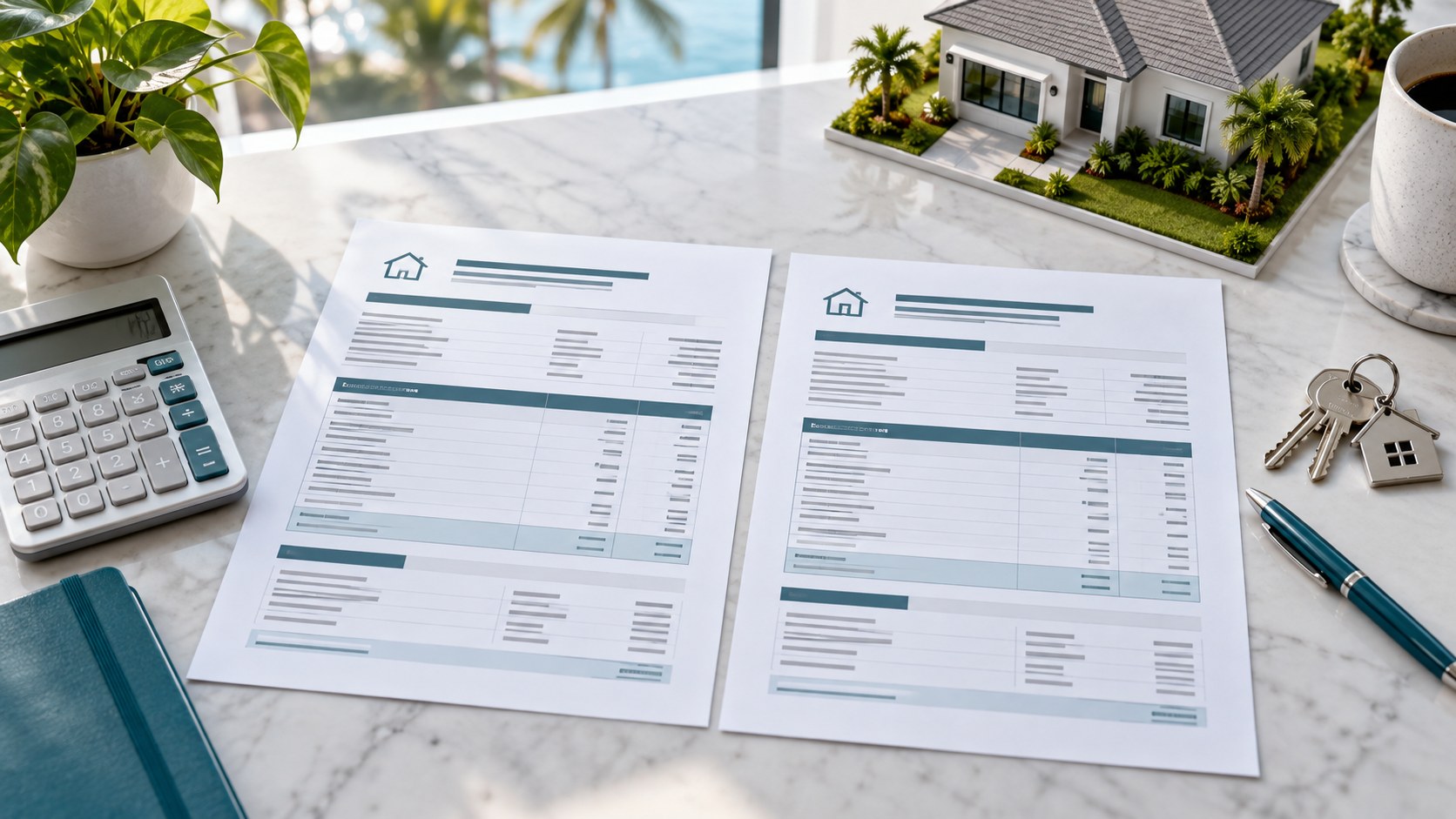
Start with the same scenario
A Loan Estimate is most useful when the offers use the same purchase price, down payment, loan type, term, occupancy and rate-lock assumptions. If one lender quoted a different loan amount or included discount points, the totals are not an apples-to-apples comparison. Ask each lender to revise the estimate around the same plan.
A Loan Estimate is an estimate of a proposed loan, not a final approval or a promise that every cost will stay unchanged. Review the date, rate-lock status and assumptions before comparing it with another offer.
Compare the payment and the money due
On page one, look beyond principal and interest. Review the estimated total monthly payment, including mortgage insurance and any estimated escrow for property taxes and homeowners insurance. For a Florida property, use an address-specific insurance quote and a realistic new-owner tax estimate when available; the seller’s current bill or policy may not match yours.
On page two, compare lender-controlled charges, services you can shop for, lender credits and estimated cash to close. Cash to close can include the down payment, closing costs and prepaid items, adjusted for deposits and credits. Keep enough savings for moving, repairs and emergencies after closing.
Use the five-year figure as one lens
The CFPB’s comparison guidance includes the total cost of the loan over five years. It can help you compare offers, but it is not a prediction of how long you will keep the mortgage or what a future refinance will cost. If you expect to move sooner, ask the lender to explain how points, credits and upfront costs affect your own timeline.
Rate matters, but so do fees, mortgage insurance, the payment you can sustain and the service you receive. Ask questions until each line makes sense, then compare the same loan structure across lenders.
Further reading
General information only. Programs, eligibility and costs vary. This article is not a loan offer, approval, rate quote or financial advice.